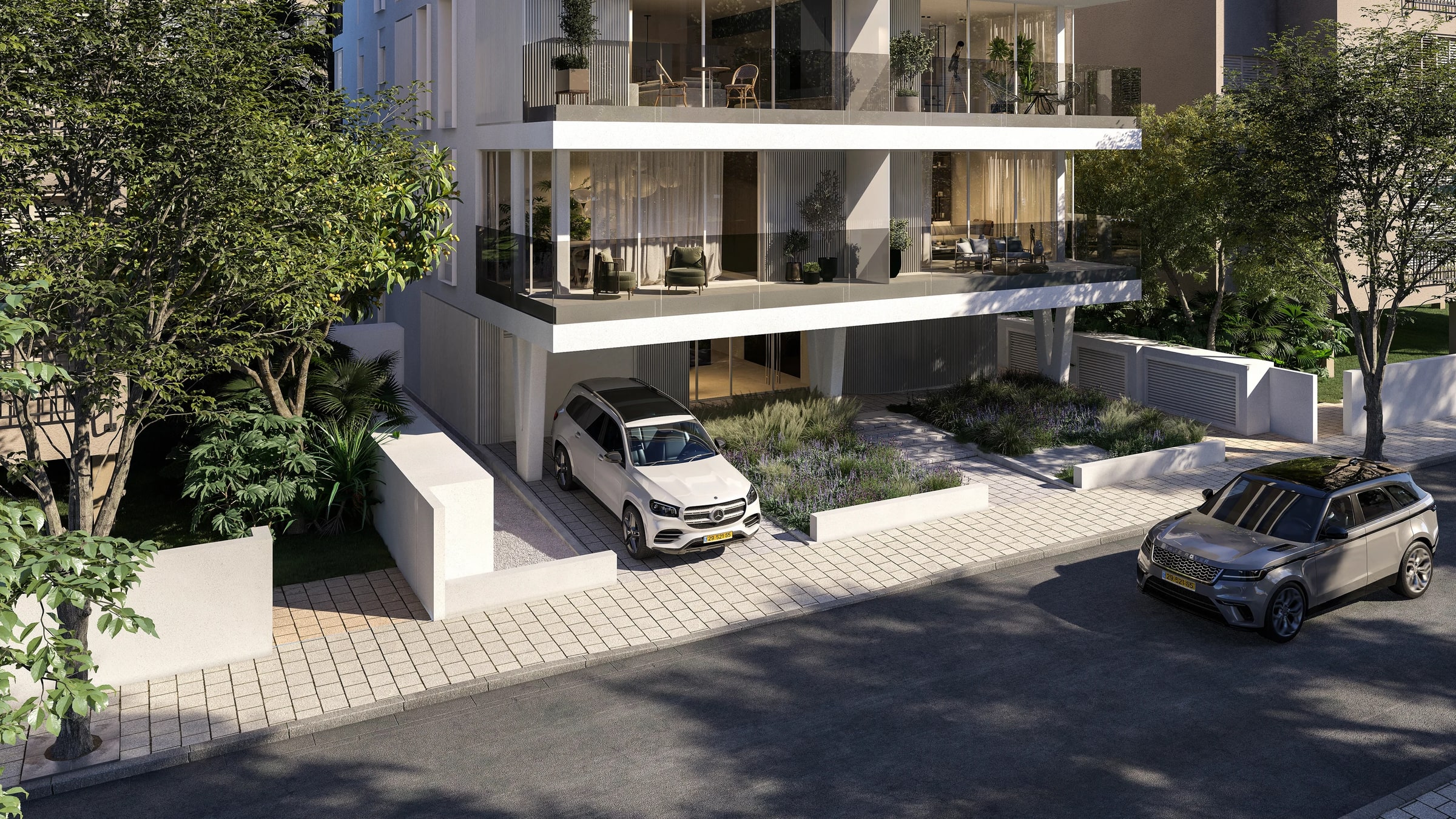
People choose a neighbourhood on price and square metres and then live in it on foot. Six months in, what you will actually have an opinion about is whether there is decent coffee within four minutes, whether there is anywhere to sit under a tree, and how long it takes to carry shopping home.
The Old North is unusually good at all three, and it is worth being specific about why, because "central and green" is what every listing in Tel Aviv says.
The geography, quickly
The Old North runs roughly from Arlozorov up to the Yarkon, and from the sea inland to Ibn Gvirol. Two sub-areas inside it behave quite differently.
Basel — the streets east of Dizengoff, around Basel Street itself. Vormaiza and Amsterdam sit here, ninety metres apart. Quieter, more residential, more trees, a longer walk to the water.
Nordau — west, toward the sea, around Nordau Boulevard. Vitkin and HaYarkon sit here. The beach is close enough to be part of an ordinary evening; the trade-off is a slightly busier street pattern.
The distinction sounds academic until you look at the walk times, where it is the whole story.
| From | Beach | Nearest café | Bakery | Rail |
|---|---|---|---|---|
| Vitkin (Nordau) | 5 min | 2 min | 9 min | 38 min |
| HaYarkon (Nordau) | 4 min | 3 min | — | 38 min |
| Vormaiza (Basel) | 15 min | 2 min | 5 min | 27 min |
| Amsterdam (Basel) | 16 min | 1 min | 6 min | 26 min |
Walk times from the surveyed data behind the map on each property page — straight-line distance with a circuity factor, so treat them as close estimates rather than stopwatch figures.
Note what the table does not show: a meaningful difference in coffee. Every one of these streets has a café inside three minutes. That is the Old North's actual character — not that it has good coffee somewhere, but that it has good coffee everywhere, at a density that makes it the default way to leave the house.
Coffee, by walk rather than by ranking
A list of the "best" cafés is worthless within a year. What lasts is knowing which walk each one is on.
The two-minute one. Every street here has a café you can reach before your coffee would have finished brewing at home. On Amsterdam and Vormaiza it is Cafe Arlosorov, one to two minutes out. On Vitkin and HaYarkon it is under the tree, two to three. These are not destinations. They are the reason people here do not own good espresso machines.
The sitting-down one. Café Eva, five to six minutes from the Basel streets, is the one you walk to when the point is to be out for an hour rather than to collect a coffee. Idelson, seven minutes from Vitkin, plays the same role on the western side.
The one with a view. Fortuna Del-Mar, nine minutes from HaYarkon, is close enough to the water to be a walk with a destination rather than an errand.
And the one that is not a café at all: La bonne Patisserie, five to six minutes from Vormaiza and Amsterdam, which is where the Friday morning walk ends for a large number of people on those streets.
The test of a neighbourhood is not its best café. It is whether the third-best one is good enough that you stop travelling for the first.
The Old North passes that test, and it is the single most reliable thing anyone can tell you about living here.
Green, in three scales
The park: HaYarkon
Park HaYarkon closes the top of the neighbourhood and is the reason the Old North does not feel dense despite being one of the denser parts of the city. From the Basel streets it is a walk of a few minutes up toward the river; from Nordau it is a little further but still ordinary.
What matters is that it is genuinely large — running tracks, sports pitches, boating on the river, the botanical garden — so it absorbs everything a small apartment cannot hold. This is where the argument for a boutique building without a gym quietly lives.
The boulevards: linear green
The Old North's second scale of green is the boulevard — a planted central strip with benches, running down the middle of the street. Nordau Boulevard is the one that defines the western half; Ben Gurion Boulevard runs east to west toward the sea.
These are not parks and they are better than parks for daily life. A boulevard is a green route rather than a green destination: you end up on one because it is the pleasant way to get somewhere, which is a much higher-frequency use than setting out for a lawn.
The squares and the street trees
The smallest scale is the one people underestimate. The Old North's residential streets are lined with mature ficus, which is why they are ten degrees more tolerable in August than a street without them, and why the light through a west-facing window here is dappled rather than flat.
Then the pocket squares — small planted corners with a bench and a few trees, distributed through the grid. You do not travel to them. You pass through them, and they are most of why the walk to the shop is pleasant.
The sea, which is its own category
From the Nordau streets the beach is four to five minutes. That number is worth sitting with, because it changes what the sea is: not an outing that needs planning and parking, but somewhere you go after work for forty minutes because it is closer than the park.
Metzitzim is the calm, family-shaped beach at seven to eight minutes. Dog Beach is nearer still. From the Basel streets both are fifteen to nineteen minutes on foot — a deliberate walk rather than an impulse, which is the clearest practical difference between the two halves of the neighbourhood.
What this adds up to
The Old North's case is not that it has one exceptional thing. It is that the ordinary things are all inside ten minutes: coffee at two, bread at five, groceries at six, a school at five, a park at the end of the street, and — on the western streets — the Mediterranean at four.
That density is the actual product. It is also why the buildings here stay small: the grid that puts everything within ten minutes is the same grid that will not accommodate a tower.
If you are weighing the western streets against the eastern ones, the honest summary is that Nordau buys you the sea and Basel buys you the quiet, and that almost everyone who has lived in both has a firm opinion about which trade they would make again.
The buildings on these streets are small for a reason, and it is the same reason everything is within ten minutes — but that is a longer argument, and it is coming. In the meantime: the buyer's agent problem in Israel, on who is actually advising you while you weigh any of this.